Advertise to AI. AI Search Visibility.
Your ideal clients are asking AI for recommendations. Right now, you are probably not the answer.
Buying behaviour has changed. Before a prospect visits your website or asks for a referral, they ask ChatGPT, Claude, Perplexity, Google and Microsoft Copilot who to trust.
Most sites fail that quietly. Some turn AI systems away without knowing it. Some send back an empty shell. Nothing on the page tells you, and no ranking report will either.
Advertise to AI is the Infokus Marketing program that makes a business readable, findable and consistently described across AI platforms. It starts with a free test of one page. What you do next is one decision with two answers: fix that page yourself, or have the whole picture fixed for you.
Infokus Marketing and AI Agency is based in Mount Eliza on the Mornington Peninsula, working with businesses across Melbourne, Victoria and Australia.

Being invisible to AI is not a quality problem. It is a structure problem.
AI platforms don’t read your presence the way Google’s results page does. They need to fetch the page, parse it, and extract facts they can stand behind. Your name, location, services, hours and contact details are all on your website — for people. Whether a machine can read them as facts is a different question, and it’s usually the one that fails.
If you’ve just found that out, it’s an unsettling thing to sit with. You’ve spent years building something real. Clients who stay. Work you’d put your name to. And somewhere in the middle of all that, a machine formed a view of your business from a page you never wrote for it — and nobody told you it was happening.
That’s not a failure of judgement. Nothing in your reporting was ever going to flag it.
For an established business it creates a quiet and expensive gap. Your expertise is real. Your track record is strong. But your name, services, location and proof are scattered across a site that implies rather than states, profiles that contradict each other, and content that was never written to be quoted.
The fix is not volume. Hundreds of auto-generated pages make it worse. Not more marketing activity — a presence built for the way AI actually reads businesses.
A list of ten gave everyone a chance. An answer names two.
Search used to hand people a page of options and let them choose. An assistant doesn’t. It reads, decides, and returns a short answer naming one, two, perhaps three businesses.
That’s a different competition. Ranking eighth on a results page still put you in front of someone. Being eighth in an assistant’s assessment puts you nowhere, because the assessment isn’t shown — only the conclusion is.
Your ideal clients are asking AI for recommendations. Right now, you are probably not the answer — and the businesses being recommended are not always the best ones. They are the ones AI can read.
A business with twenty years of results and a website that states nothing plainly can lose to a newer competitor whose site says exactly what it does, where, and for whom.
The useful part is that the signals these systems rely on are mostly things you already control — your own pages, your own profiles, the records you’ve already got. Very little of it shows up in the reporting most businesses look at, which is why so few have checked.

There is a difference between a website a machine can read and a business a machine can recommend.
Advertise to AI is structured data work, but it isn’t an IT job. What gets published about a business is its story. Someone has to decide which parts of that story matter enough to be made machine-readable, and that’s a marketing decision before it’s a technical one.
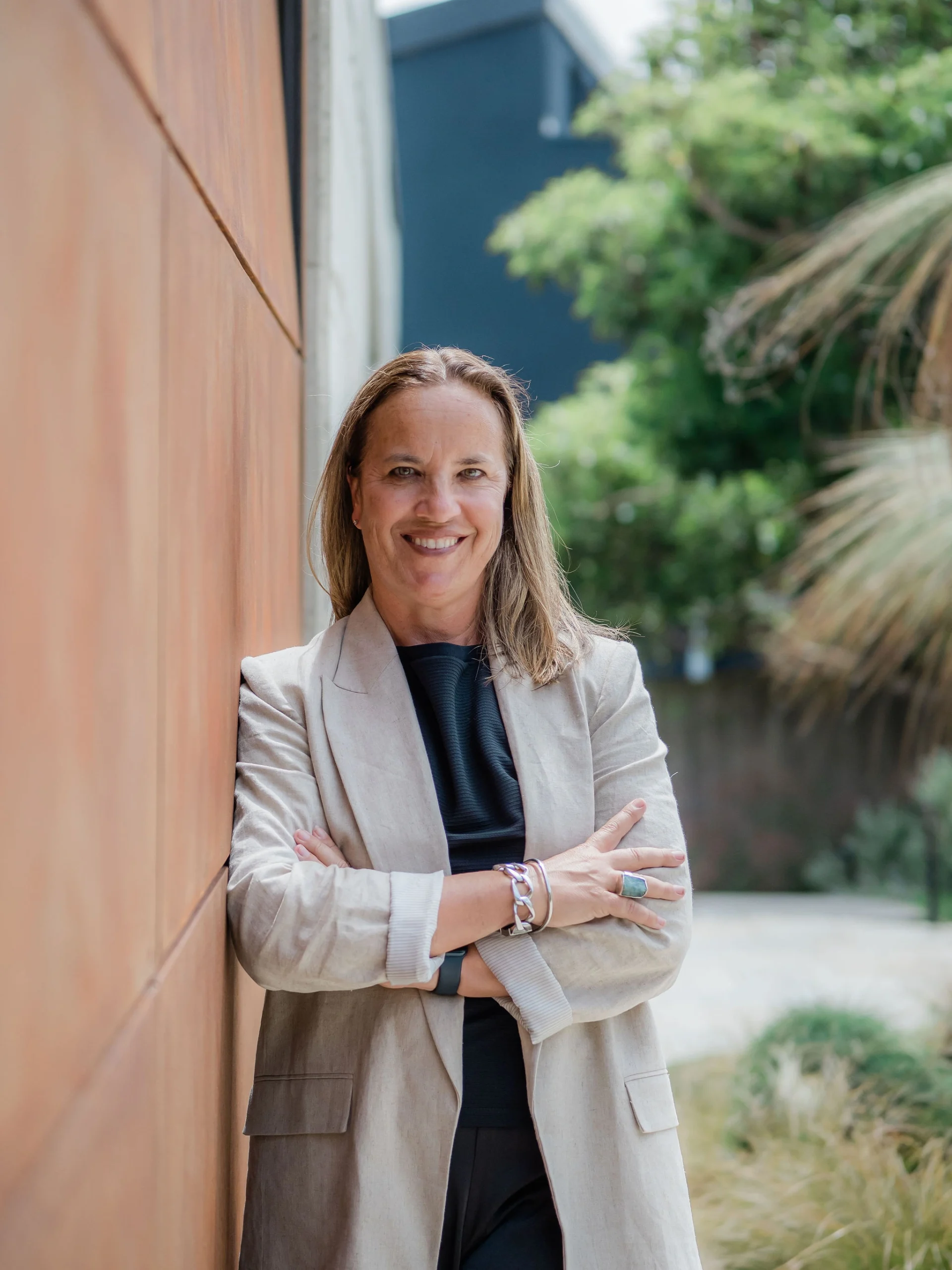
Tanya Duncan is a fractional marketing manager with more than thirty years helping businesses grow. Not thirty years in AI — nobody has that. Thirty years in the thing that decides whether this work lands: positioning, the customer journey, brand story, and knowing what a buyer needs to hear before they choose.
Most AI visibility work starts from a technical brief. Audit the schema, fill the gaps, move on. The result is correct and says nothing. Tanya starts from the marketing: who the customer is, what they’re actually asking, and what the business needs to be known for. The structured data is built to carry that, rather than to replace it.
A website a machine can read is a technical outcome, and plenty of people can deliver it. A business a machine can recommend needs someone who understands what the business is for, who it serves, and how it wants to be described when it isn’t in the room.
What that means in practice
- Every piece of writing is a marketing decision first and a schema decision second
- The customer journey decides which pages get the work — not a crawl report
- The brand story is preserved, not flattened into fields
- The brand story is preserved, not flattened into fields
- Machine-readable is a constraint on how it's written. It's never the point of it
- If the structured data and the brand disagree, the brand wins and the data is rebuilt
The wider background
Copywriting — the discipline this whole program runs on. Marketing strategy — positioning, audience and the customer journey. Website design and development — why implementation is possible in-house. Paid digital advertising — search and social, measured against revenue.

Five questions a machine asks before it names you
Each one is meaningless until the one above it is answered. The free test answers the first two. The rest is what the program does.
- What does AI actually see when it looks at my site?
Whether the page arrives at all. Some sites turn AI systems away without knowing it; some send back an empty shell.
Answered by: the free Retrieval Test
- Does it know who I am, where, and what I actually do?
Your name, location, services, hours and contact details are on the page for people. Whether a machine can read them as facts is a different question — and it’s usually the one that fails. Answered by: the free Retrieval Test
- Does the rest of the internet back me up?
Google Business Profile, LinkedIn, directories, your own profiles. One source saying who you are is a claim. Several agreeing is a fact. This is where being recommended starts.
Diagnosed by Basic · Corrected by Comprehensive - Is anything of mine worth quoting – and does it say the right thing?
An assistant quotes passages, not businesses. There are two ways to lose here: having nothing worth lifting, or being quoted accurately about the wrong half of what you do.
Answered by: Comprehensive - Does it stay true?
New staff, new services, a moved office, a lapsed listing. Details decay quietly, and a confidently wrong answer is worse than none.
Answered by: the Care Plan
What changes, in practice
You run the same free test you started with, and the numbers have moved. You can do that any day you like, without asking us.
A machine describes your business back to you and gets it right — what you do, who you do it for, where you are, and how someone reaches you. Your website, your Google Business Profile, your LinkedIn and every directory you appear in agree with each other, because someone went and made them agree.
Your best thinking sits in a form an assistant can lift a passage from, answering questions your buyers are genuinely asking rather than questions a keyword tool suggested.
And you know where you stand, because it was measured before anything changed and measured again afterwards, under the same conditions.
Whether a platform names you on any given day is still its decision, not ours. But you’re no longer losing on the part you control — which, right now, is where most businesses are losing.
- Clear recommendations for the content updates your existing pages need
- Schema and technical implementation to make your website machine-readable
- Foundational articles written and published, with your approval, to fill your citation gaps
- Google Business Profile, Bing, and LinkedIn aligned with every other signal
- Third-party citations built to corroborate your credibility
- Every asset re-tested against the platforms after publishing
Full page rewrites available as a program extension where the strategy calls for them.

The Retrieval Test free, and genuinely free
Enter one web address. Nine AI crawlers — the systems behind ChatGPT, Claude, Perplexity, Google and Microsoft Copilot — fetch that page live, exactly as they really would. It takes under a minute.
You see your two scores and which systems were served straight away. Entering an email opens the rest of the report, and we send you a link to keep.
One run per email address. No call required. Nothing is installed and nothing touches your site.
The two scores
- Page delivery, out of 100. Did your page arrive, intact, for all nine crawlers?
- Machine-readable, out of 100. Can they use what arrived?
They fail independently. A page can be delivered flawlessly to all nine and still leave every one of them unable to tell what you do or where you are. Machine-readable is the one that decides whether you get used.
What you get
- Your two scores out of 100 — Page delivery and Machine-readable
- Your business as a machine would describe it, and every field it could not fill
- The exact text a machine is left holding, verbatim
- Which facts are on the page but not readable as data
- Whether a machine can tell what you do, where you operate, when you’re open, who you’re for, and how to book or buy — the five things a buyer asks
- Eleven conditions an assistant needs met before it can quote a page, and which are missing
- A saved report link, and a PDF you can download
The Playbook
A short survey, then within one to two business days a step-by-step document covering your home page — for you or your developer. No calls, no meetings, no access to your site.
- Your structured data, written out and ready to paste — who you are, where you operate, what you do, when you’re open, who you’re for and how to book
- Every fact on the page made machine-readable
- Your llms.txt file, written
- Your robots.txt corrections, exact lines
- The paragraph that describes your business to AI, under 800 words
- Which parts are site-wide and which are specific to the page — marked in the document, so nothing is done twice
- A checklist in order, with what “done” looks like
- Free re-runs of the test to watch the numbers move
We do not touch your website, ask any AI platform a question, or look at any other platform. It fixes that page, properly.
Basic
The full investigation, your own site put right, and everything written — yours to implement or ours.
- Your digital audit — every place your details appear, and exactly where those disagree
- Your starting position — six real buyer questions, run three times each across four AI platforms, scored and screenshotted
- Competitor comparison — the three businesses a buyer weighs you against, read the way a machine reads them
- The citation gap — who was named instead of you on those questions, and what their pages state that yours doesn’t
- The correction plan — where your site’s structure, content and wording are costing you citations, in priority order, with the effort against each
- Your complete structured data, written
- An Entity page, written — who you are, what you do, where, for whom, and your proof
- An FAQ page, written — the questions your buyers actually ask, answered so an assistant can lift them
We tell you where every record disagrees — your Google Business Profile, LinkedIn, directories, all of it. Correcting those, and writing the words to paste into each one, is Comprehensive. Basic is the diagnosis, and the work on your own site.
We can tell you who was named and what their pages say that yours doesn’t. We cannot tell you why a platform chose them — nobody can, and anyone who says otherwise is guessing.
Comprehensive
Everything in Basic, plus the content and the proof.
- Everything in Basic
- Buyer question research — 40+ search terms and 20–30 real questions, mapped to where AI has no good answer yet
- A strategy session and the content plan
- Five foundational articles, written to be quoted from
- Content for five existing pages — home page and four others
- Every other platform put right — Google Business Profile, LinkedIn, Bing Places, Apple Business Connect and your directory listings, with the words written for each, ready to paste
- A free re-check at day 30
- The 90-day measurement against your starting position
- The full report
Look back at the five questions
Basic answers the first two and shows you the third. It makes you readable, makes you known, and tells you exactly where every other record disagrees with you. That is real work, and for some businesses it is enough — particularly if your listings are already in order, or you would rather put them right yourself.
Question 3 is where Comprehensive stops telling and starts doing. Every profile, directory and listing put right, with the words written for each one.
Question 4 is the one Basic cannot reach. An assistant quotes passages, not businesses, and if nothing you have published is worth lifting, being perfectly readable just means being accurately overlooked.
And Comprehensive is the only version that proves itself. Your starting position is locked before anything changes, then the same questions are re-run ninety days later under identical conditions.
That is what the five articles are for.
Basic tells you where you stand once. Comprehensive tells you whether it moved.
If you are not sure which you need, start with the free test and we will look at the result together. That conversation costs nothing either.
Tell us which, and we’ll send the survey
Every option begins with the same short set of questions about your business — the facts a machine needs and cannot currently find. Fifteen minutes for the Playbook, about twenty-five for Basic or Comprehensive. Once, and you are never asked for them again.
Thank you — that is with us.
We have a copy of what you sent. You will hear back from a person the same business day — not a sequence.
You can stop at any point and keep what you have paid for. Nothing is sold to you after the first decision — the Care Plan is agreed at signing, not introduced at the end.
Why the Playbook covers one page
The free test measures one page properly — nine crawlers, a full fetch. It only glances at the rest.
A Playbook covering five pages would be selling you work on four pages that were never measured, and you couldn’t check four-fifths of it.
One page closes the loop. We measured this page. We fixed this page. Re-run the same free test and watch the number move. That’s the only version of this you can prove yourself.
If you’re wondering why one page is $490
Most of what you’re buying isn’t the page.
Your structured data, your llms.txt and your robots.txt are the same work whether you have one page or fifty. That’s your business identity written as data.
Extra pages are $95 because once that’s done, each additional page is a small increment.
What implementation means and what it doesn't
On your website — we deploy it
Basic: your structured data deployed and validated across the site.
Comprehensive: all of that, plus the new content applied to your home page and four key pages, the two new search pages published, all five articles published with their schema, sitemap resubmitted and indexing requested.
We add structured data and pages. We are not touching your design, your theme, or anything already working.
Everywhere else — we write it, you paste it
Google Business Profile, LinkedIn, Bing Places, directories.
Basic tells you what needs correcting on each. Comprehensive writes it — descriptions, service entries, Q&As, profile rewrites, finished and ready.
Why you paste it: these need your logins, and waiting on account access is where this kind of project stalls. Handing you finished copy is faster than chasing permissions. If you’d rather we did it, we quote it separately.
Outside the price, always quoted separately
Website redesign or rebuilds · paid directory and listing fees · third-party platform costs · development work beyond your content management system · off-site updates if you want us to do them.
If a change needs a developer rather than an editor, we quote it before starting, never after.
What is guaranteed and what is honestly not
Guaranteed
By the end of month one, a machine can reach your site, read it, and identify who and where you are — and every record you control says the same thing.
We can promise that because it’s a matter of fact, not chance. You can verify it yourself with the same free test, any time, for nothing. If it isn’t true, we fix it at no charge.
Not guaranteed
That an AI platform will name you within ninety days.
We measure it three times per question across six platforms and report the frequency whether it moved or not. If everything we control has improved and citation hasn’t, your next measurement is free.
Ninety days is a short window, and “not yet” is sometimes the honest answer. We never re-cut the questions to find a better number.
What becomes true, and when
Readable and known
Every AI system can reach and read your site. It knows who you are and where. Every record you control has been corrected. Your starting position is measured and locked — nothing is changed before it is.
A free re-check
Your second number, ten weeks before the final measurement — so you can see movement rather than wait for it.
Answers worth quoting
Five articles written to answer the questions your buyers actually ask, in a form an assistant can lift a passage from. Podcast and directory approaches begin now, because they take time to land.
Confirmed and proven
Everything published and distributed, third parties confirming your story, and the same questions re-run against month one. Two measurements, ninety days apart, under identical conditions.
Held
The Care Plan. Agreed at signing, so it is a step down rather than a new sell.
Nothing that could move a result is changed before the first measurement is taken. The before-and-after is the proof, and spending it early would make the whole thing unprovable.
Keeping it true
From month four. Agreed at signing with fourteen days’ notice to cancel, so it is never a surprise.
Monitor
We watch, you actMonitor + Maintain
We watch, we act RecommendedMonitor + Amplify
We watch, we act, we growLimited places
All tiers billed quarterly in advance. Annual options available on the first two.
Find out where you actually stand
The Retrieval Test takes under a minute and costs nothing. You’ll see whether your page arrives intact for all nine AI crawlers, and whether they can use what they find.
If both numbers are good, you’ve lost a minute. If they aren’t, you’ll know precisely what’s wrong before anyone asks you for anything.
What Our Clients Are Saying
“For the past five years, Tanya Duncan at Infokus Marketing has been an integral partner to Galvin-Rowley Executive as our Marketing Consultant and strategic marketing lead. During this time, she has created and implemented a highly effective marketing strategy that has positioned our brand with clarity, consistency and measurable impact.
Tanya is an exceptional listener who has taken the time to understand our business and the nuances of our industry. This depth of understanding is reflected in everything she produces, from strategic direction through to the quality of collateral, which is consistently outstanding. We receive regular positive feedback from clients on the professionalism, precision and polish of our materials.
As a boutique executive search firm working with blue-chip clients, our brand presence must reflect that level of excellence. Tanya ensures it does. Her ability to capture our tone, positioning and values with such accuracy speaks to both her creative talent and her strategic discipline.
She has also been a trusted advisor to me personally as Director, providing thoughtful counsel and foresight as our brand has evolved. Beyond her marketing expertise, Tanya has built and implemented our AI Assistant 2.0, a genuine step forward in the way we operate and engage with clients.
Tanya is a rare combination of strategist, creative and technical expert, and a deeply valued partner to Galvin-Rowley Executive.”
— Jennifer Galvin-Rowley, Director, Galvin-Rowley Executive
Our custom-trained AI agent has become an essential part of our team. After six months, we now have total confidence that anyone on the team can create content that sounds like us.
Jen G.
The AI Brain from Infokus feels like it was crafted just for us. The relevance and precision are spot-on — it’s like the new best friend for our marketing and communications.
Barbara B.
What do you get when a slightly sceptical business owner meets a marketing expert with a knack for making tech human? Clarity. Strategy. And an AI assistant that doesn’t sound like it’s auditioning for a late-night infomercial.
Sangeeta T.
For the past five years, Tanya Duncan at Infokus Marketing has been an integral partner to Galvin-Rowley Executive. She has created and implemented a highly effective marketing strategy that has positioned our brand with clarity, consistency, and measurable impact.
Jennifer Galvin-Rowley

Common questions about Advertise to AI and AI search visibility
Q. What is Advertise to AI?
Advertise to AI is the Infokus program that makes a business readable, findable and accurately described across AI platforms such as ChatGPT, Claude, Perplexity, Google and Microsoft Copilot. It starts with a free test showing what AI systems receive when they read one page of your site, and whether they can use what arrived. From there it runs at one of two depths: the Playbook fixes that page, and Basic or Comprehensive investigate and correct your whole presence — your website, your structured data, your profiles and the content worth quoting. Infokus is based in Mount Eliza on the Mornington Peninsula and works with businesses across Australia.
Q. Is the free test really free?
Yes. One run per email address, no call required, nothing installed. It costs us almost nothing to produce, which is exactly why giving it away makes the paid measurement credible.
Q. What do the two scores mean?
Page delivery is whether your page arrived, intact, for all nine crawlers. Machine-readable is whether they can use what arrived. They fail independently, and the second is the one that decides whether you get used. Neither is a visibility score — both are facts about a page. Whether platforms actually name you is a separate measurement, and the free test doesn’t attempt it.
Q. Will this get me into ChatGPT?
No one can promise that, and anyone who does is guessing. What we guarantee is that AI systems can reach you, read you and identify you correctly – and you can check that yourself with the free test. Whether a platform names you on a given day depends on the question asked and who else is competing for it.
Q. Should I do Basic or Comprehensive?
Basic answers the first three of the five questions — readable, known, and every record you control corrected. Comprehensive adds the two that Basic can’t reach: content worth quoting, and proof. If your category isn’t being asked about much yet, Basic may genuinely be enough for now. If you want to know whether any of it moved, Comprehensive is the only version that measures the same questions ninety days apart. Run the free test first and we’ll look at the result together before you decide.
Q. Who actually does this work?
Tanya Duncan, a fractional marketing manager with more than thirty years helping businesses grow. That background is the point: this is not a technical audit with words bolted on afterwards. The writing is done by someone whose job has always been positioning, customer journey and brand story, and the structured data is built to carry that, not to replace it.
Q. How does a business end up being named in an AI answer?
AI platforms name businesses they can read and verify. That depends on four things together: your details are consistent everywhere you appear, structured data lets a machine confirm the facts rather than infer them, your content answers the questions buyers are actually asking, and other sources back up what you say about yourself. A business strong on one and weak on the others is at a disadvantage against one that has all four. We control everything the answer is built from. The decision itself belongs to the platform.
Q. How is this different from SEO?
SEO is about ranking a page in a list of links. This is about whether a machine can read your business as a set of facts, whether other sources agree with those facts, and whether anything you have published is worth quoting in an answer. The work overlaps in places; the question being answered is different.
Q. What is the difference between AI visibility, GEO, AEO and LLMO?
They’re four names for overlapping work, and the industry hasn’t settled on one. Generative engine optimisation (GEO), answer engine optimisation (AEO) and large language model optimisation (LLMO) all describe making a business readable and quotable by AI systems rather than ranking it in a list of links. We use “AI search visibility” because it’s the plainest description of what’s being measured: whether you appear, and how accurately, when someone asks an assistant a question. Advertise to AI is our program for doing it.
Q. Why is the Playbook only one page?
Because that’s the page we measured. The free test fetches one page properly — nine crawlers, a full fetch. A Playbook covering five pages would be selling you work on four pages nobody measured, and you couldn’t check four-fifths of it. One page closes the loop: we measured it, we fixed it, you re-run the same free test and watch the number move. Additional pages are $95 each.
Q. Why is one page $490?
Because most of what you’re buying isn’t the page. Your structured data, your llms.txt and your robots.txt are the same work whether you have one page or fifty — that’s your business identity written as data. Extra pages are $95 because once that’s done, each additional page is a small increment.
Q. Why is the Playbook so much cheaper than Basic?
Because it answers a smaller question. It fixes the page the free test looked at. It does not investigate your other platforms and it does not ask any AI platform what it says about you. Both are legitimate; they are different amounts of work.
Q. Do you need access to my website?
Only if you want us to deploy it. The documentation is yours to hand to your own developer. If you do want us to do it, we work inside your content management system — adding structured data and pages. We do not touch your design.
Q. Do you rewrite our website?
No. Your existing website is the starting point. Basic gives you your structured data written and a correction plan. Comprehensive adds new content for your home page and four key pages, two new search pages and five articles — written to sit inside what you already have. We add structured data and pages; we don’t touch your design or your theme. Website redesigns and rebuilds are always quoted separately.
Q. Does this involve paying for ads?
No. Your existing website is the starting point. Basic gives you your structured data written and a correction plan. Comprehensive adds new content for your home page and four key pages, two new search pages and five articles — written to sit inside what you already have. We add structured data and pages; we don’t touch your design or your theme. Website redesigns and rebuilds are always quoted separately.
Q. What is the smallest thing I can start with?
The free Retrieval Test. It takes under a minute, no call, nothing installed. If you want the fix for that page written out, that’s the Playbook at $490 plus GST. Neither commits you to anything further.
Q. What do you need from me?
A short survey about your business, once. Access to the platforms we are correcting. Approvals within five business days, and content approved by the 20th of the month. That is the whole list, and it is given to you in writing at the start.
Q. How long before we see results?
Your starting position is measured and locked before anything changes. By the end of month one, the things we control are fixed and you can verify that yourself with the free test. Whether platforms start naming you, and how quickly, depends on your category and your competition — which is why Comprehensive includes a free re-check at day 30 and a full measurement at ninety days. We report what the numbers show on the days we tested, whether they moved or not.
Q. How do you measure whether it's working?
We run ten to fifteen real buyer questions, three times each, across six AI platforms, and score and screenshot every result. Three passes matter because AI answers vary between runs — one result is an anecdote. The same questions are re-run every time, so movement is directly comparable, and we never change the questions to produce a better number.
Q. What if nothing changes after three months?
Everything we control will have changed, and that is measurable — you can verify it yourself. If the citation numbers haven’t moved while the rest has, your next measurement is free. Ninety days is a short window for a category that may not be asked about much yet, and we’ll tell you that plainly rather than re-cut the questions to find a better number.
Q. We already have an SEO agency. Does this conflict?
No. We’re answering a different question from the one they are. The documentation is written to be handed to whoever already works on your site — that’s what the Playbook is for. If your SEO agency wants to implement it, that’s a good outcome, not a lost one.
Q. Do you work with businesses outside the Mornington Peninsula?
Yes. Infokus is based in Mount Eliza and we work in person across the Mornington Peninsula and Melbourne. The program runs the same way remotely, and we work with businesses across Victoria and the rest of Australia.
Q. What kinds of businesses is this for?
Established, expertise-led businesses where someone is choosing a professional — legal, accounting, financial advisory, consulting, engineering, executive search and recruitment, and medical specialists and allied health. It also works for any business that has to be found locally and described correctly, including clinics, venues and trades.